
Thermal-Power Equilibrium™
The balance between energy input, waste heat production, coolant transport, heat rejection, material temperature limits, and operational efficiency.
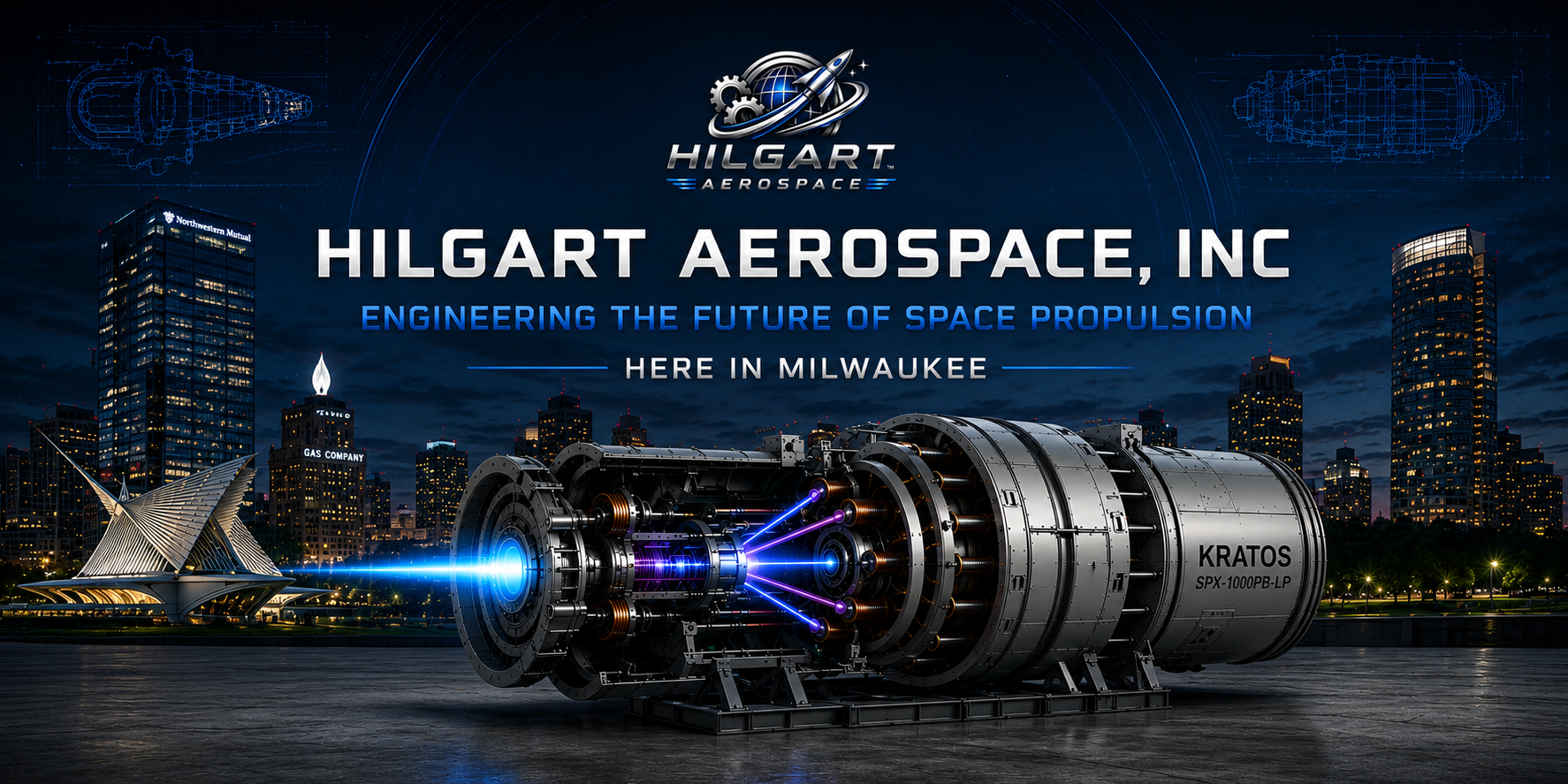
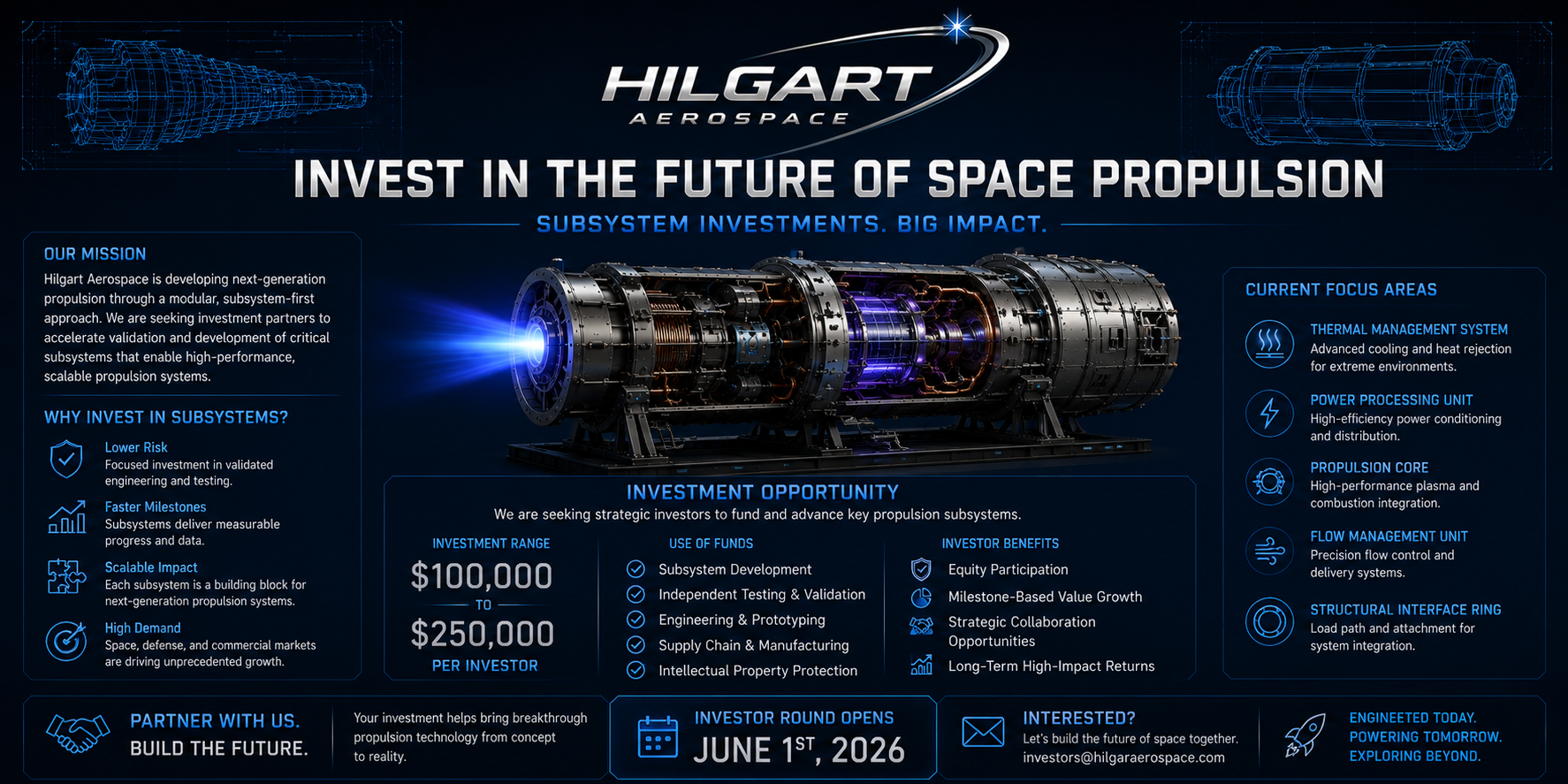
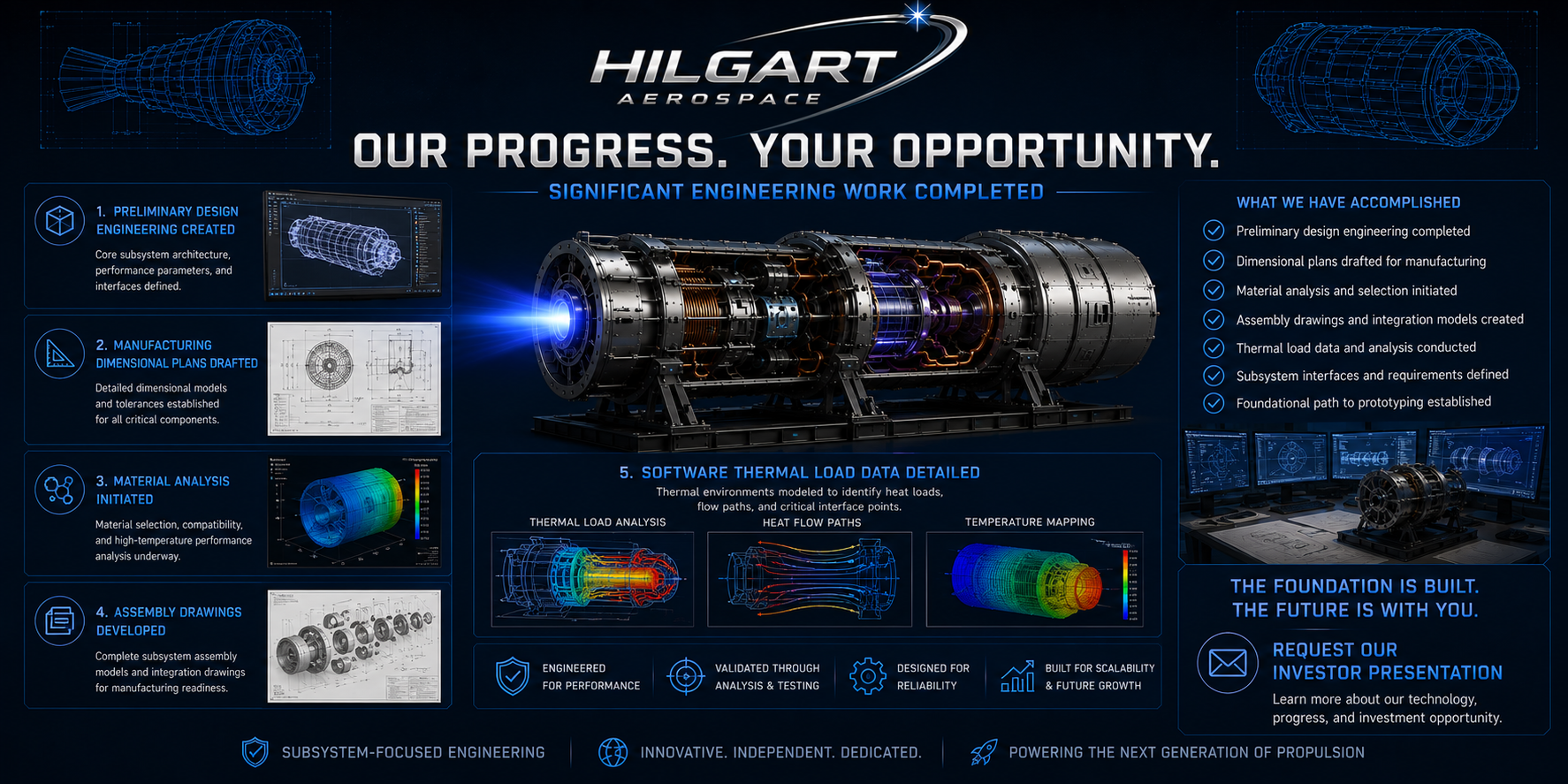
Hilgart Aerospace develops modular propulsion architecture through Thermal-Power Equilibrium™, subsystem-first validation, thermal management engineering, power integration, and HUMAN™ automated control systems.
Future propulsion performance is limited by energy balance, waste heat, coolant transport, material limits, heat rejection, control response, and repeatable validation.
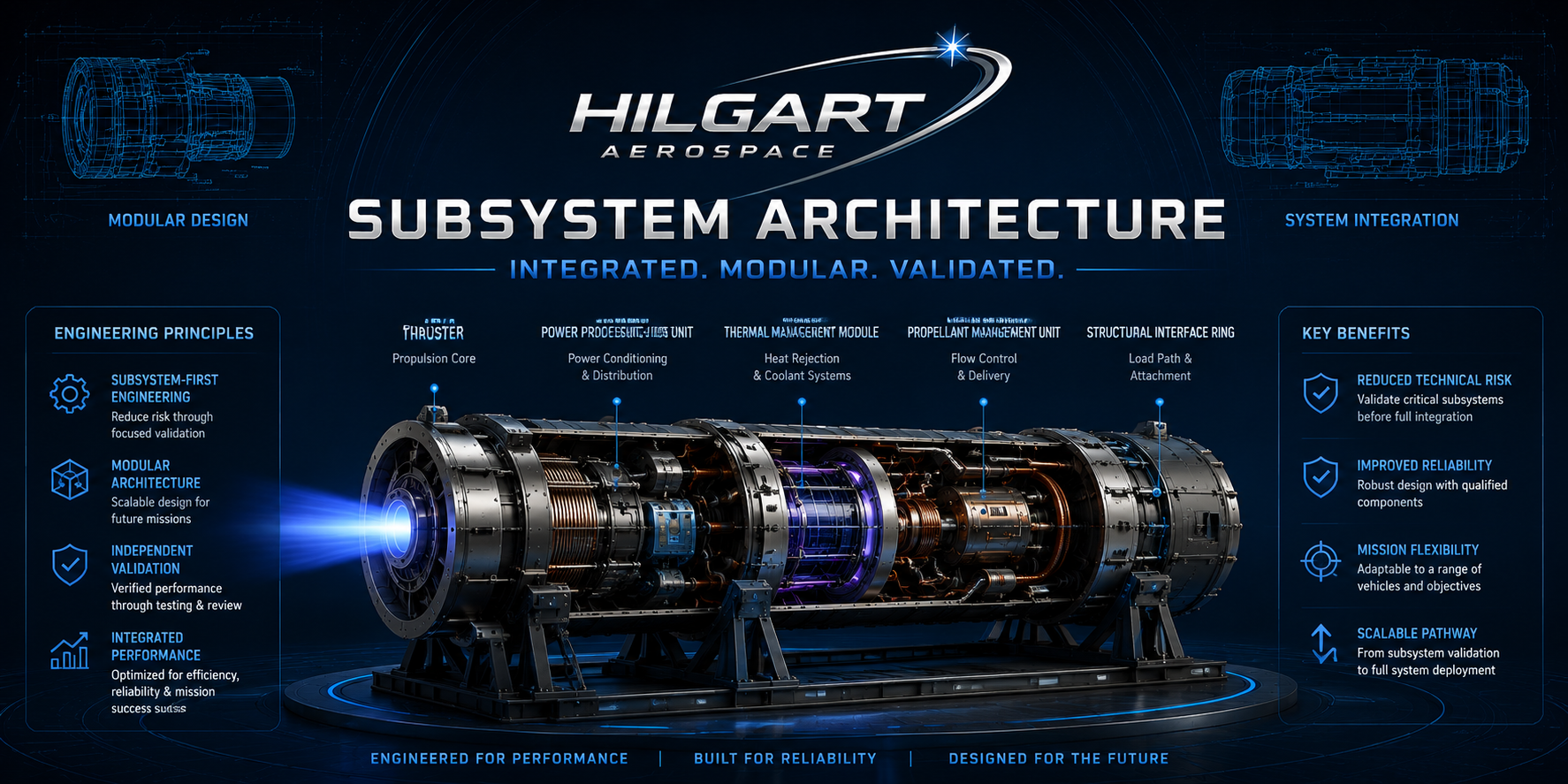
The Kratos SPX platform is being developed as a modular propulsion architecture with removable, serviceable, testable, and independently validated subsystems. This approach is intended to reduce technical risk, isolate failure modes, and support disciplined advancement from concept to tested engineering data.
Hilgart Aerospace is positioned around four technical foundations: Thermal-Power Equilibrium™, subsystem-first validation, modular propulsion architecture, and HUMAN™ control system development. Together, these create a practical engineering pathway from concept development to measurable technical evidence.
The balance between energy input, waste heat production, coolant transport, heat rejection, material temperature limits, and operational efficiency.
A subsystem-first approach designed to test assumptions, reduce technical risk, isolate failure modes, and validate each major architecture element before full integration.
Propulsion architecture built around defined interfaces, serviceable subsystems, replaceable assemblies, and future upgrade paths without complete system redesign.
Hilgart Unsupervised Multi-Modal Artificial Neural™ architecture for long-term system monitoring, diagnostics, subsystem coordination, and adaptive control.
Hilgart Aerospace is organized around a disciplined technical thesis: future propulsion systems must be developed through validated subsystems, not unsupported performance claims. The first priority is proving the thermal-power balance that determines whether higher-energy propulsion operation can be sustained reliably.
Heat rejection, coolant media, radiator architecture, material limits, and auxiliary recovery are treated as primary design drivers rather than late-stage additions.
Each major subsystem is designed around defined interfaces, independent review, serviceability, replacement, and upgrade potential.
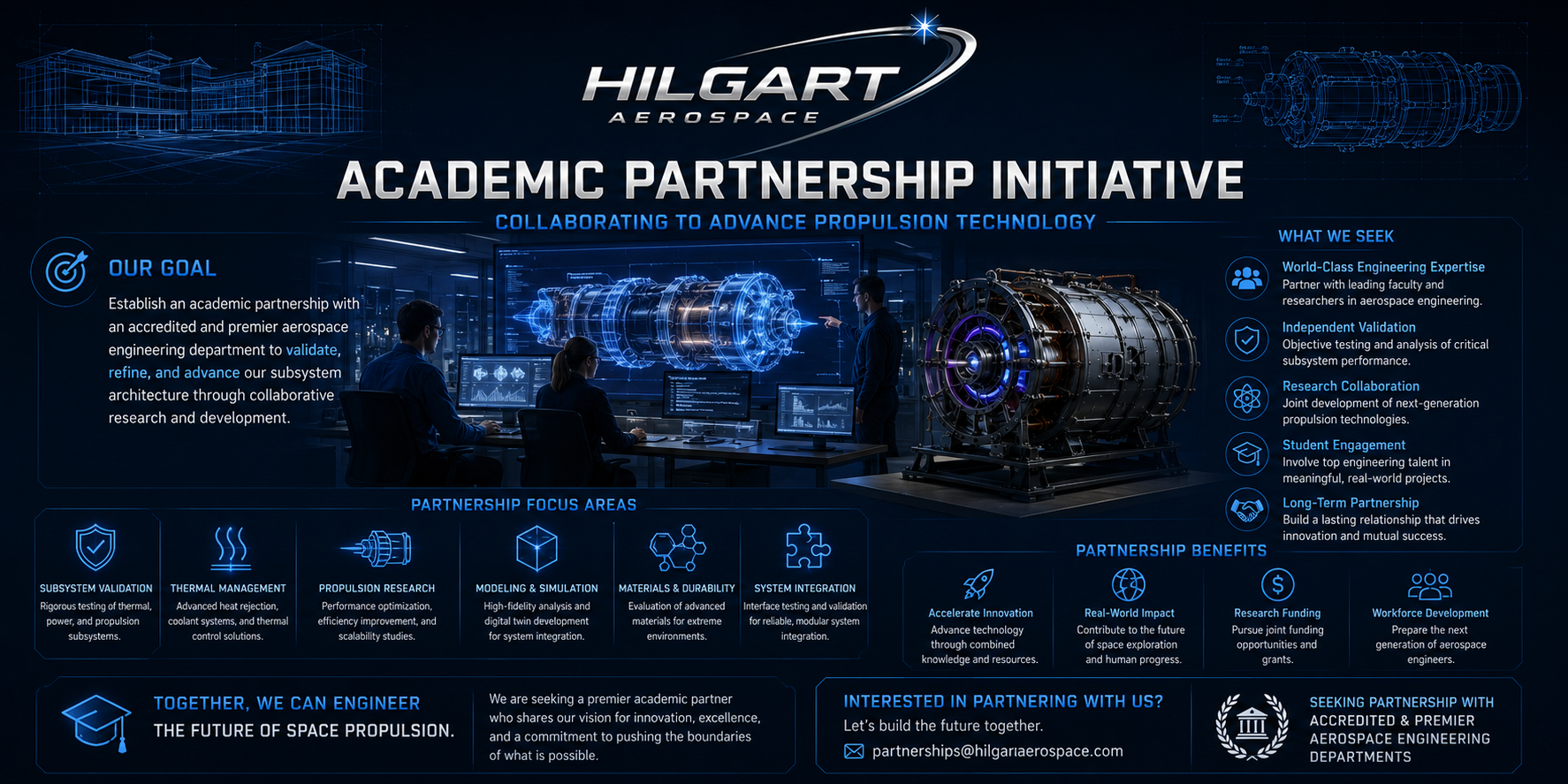
The development path emphasizes university engagement, technical review, modeling, trade studies, test planning, and data-driven design decisions.
In advanced propulsion systems, performance cannot be separated from heat. Higher power density creates higher thermal loads. Higher thermal loads require coolant transport, heat rejection surfaces, material tolerance, control response, and verified operating margins. Thermal-Power Equilibrium™ is the engineering framework Hilgart Aerospace uses to evaluate that balance.
Can the propulsion architecture maintain equilibrium between input power, waste heat generation, coolant transport, heat rejection, material limits, and auxiliary recovery under realistic operating assumptions?
A propulsion concept can only advance when its thermal limits are understood. Thermal validation determines safe operating envelopes, system reliability, subsystem sizing, and the credibility of future performance claims.
Energy conversion, combustion, plasma interaction, electrical losses, magnetic components, and high-temperature flow paths create the thermal load that must be measured and controlled.
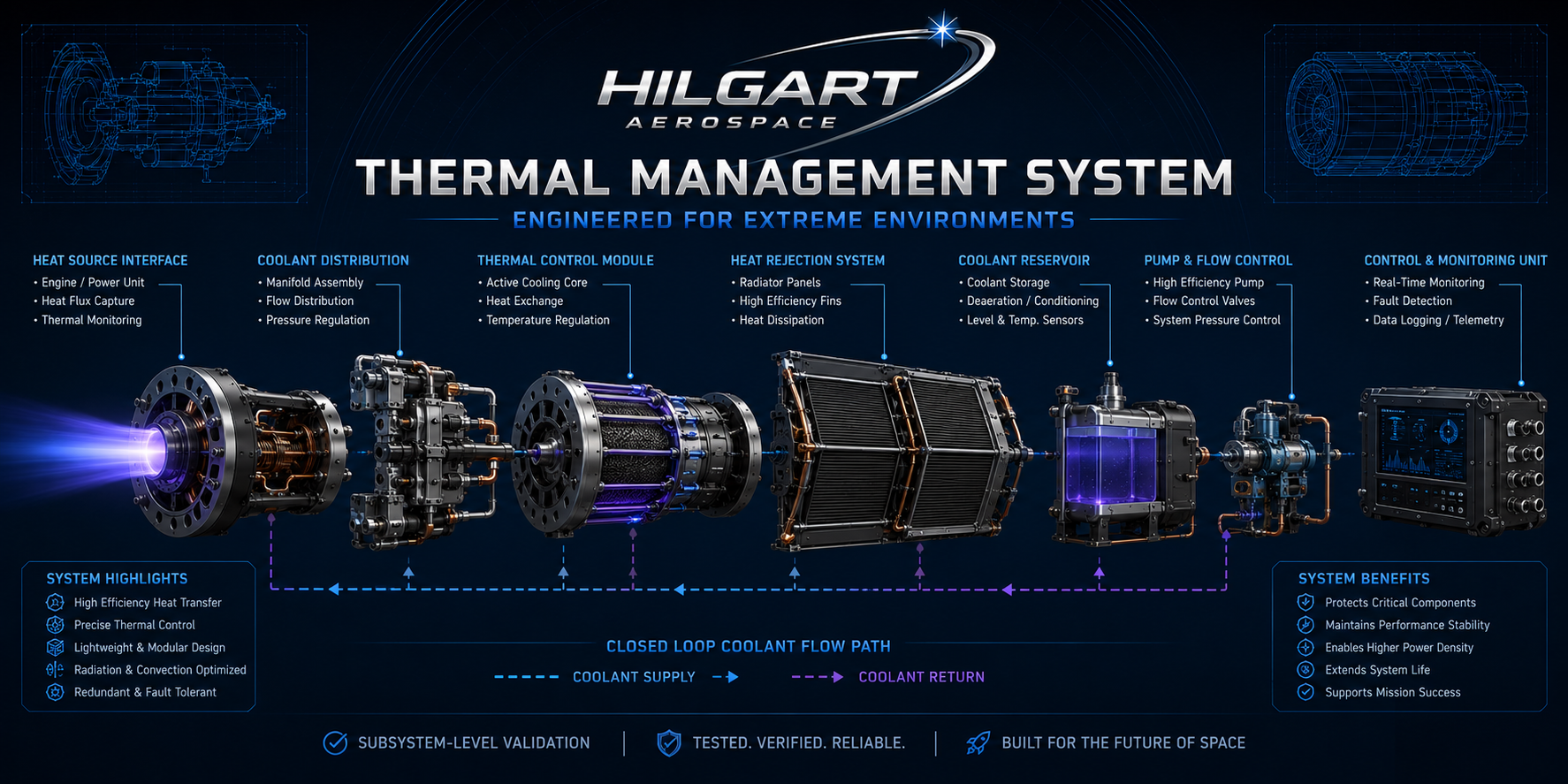
Coolant pathways, flow rates, pressure stability, manifold design, materials, and filtration determine whether thermal energy can be moved away from critical components.
Radiator architecture, surface area, emissivity, deployment strategy, and auxiliary power recovery determine whether extracted heat can be rejected or reused effectively.
The long-range vision remains ambitious, but the near-term strategy is precise: define the interfaces, test the assumptions, validate the thermal foundation, and expand into full SPX integration through measurable subsystem milestones.
Identify the subsystem function, operating envelope, interface requirements, material constraints, failure modes, and measurable success criteria.
Compare thermal, structural, fluid, electrical, control, and manufacturing tradeoffs before committing to prototype development.
Validate one major system element at a time so technical risk is isolated instead of hidden inside a full integrated assembly.
Use measured subsystem data to inform SPX integration, control logic, materials selection, thermal margins, and future design revisions.
The SPX architecture is not being treated as a buried component assembly. Critical subsystems are designed to be removable, replaceable, testable, and independently reviewed before full platform integration. This approach supports maintenance, risk reduction, and future upgrades as technical data matures.
Focused on coolant transport, heat rejection, material limits, radiator sizing, filtration concerns, and the system-level balance between power and heat.
Developed around controlled flow paths, gas-ring concepts, staged operation, magnetic stabilization, and future test programs.
Long-term automated control architecture for monitoring, diagnostics, decision support, subsystem protection, and adaptive operating logic.
Hilgart Aerospace will expand its public research content around thermal management, propulsion validation, advanced aerospace systems, and AI-enabled control architecture. This gives technical visitors a deeper path into the company beyond a single program page.
Heat rejection methods, coolant trade studies, thermal bottlenecks, hydrogen cooling, waste heat recovery, and thermal validation methodology.
Verification versus validation, subsystem-first testing, technical risk reduction, development gates, and independent review strategies.
Predictive diagnostics, digital twins, sensor fusion, fault detection, autonomous monitoring, and control-system coordination.
Hilgart Aerospace is developing a technical ecosystem around propulsion architecture, thermal-power balance, validation frameworks, and integrated system control. The objective is to move from concept to measurable engineering evidence through disciplined subsystem development.